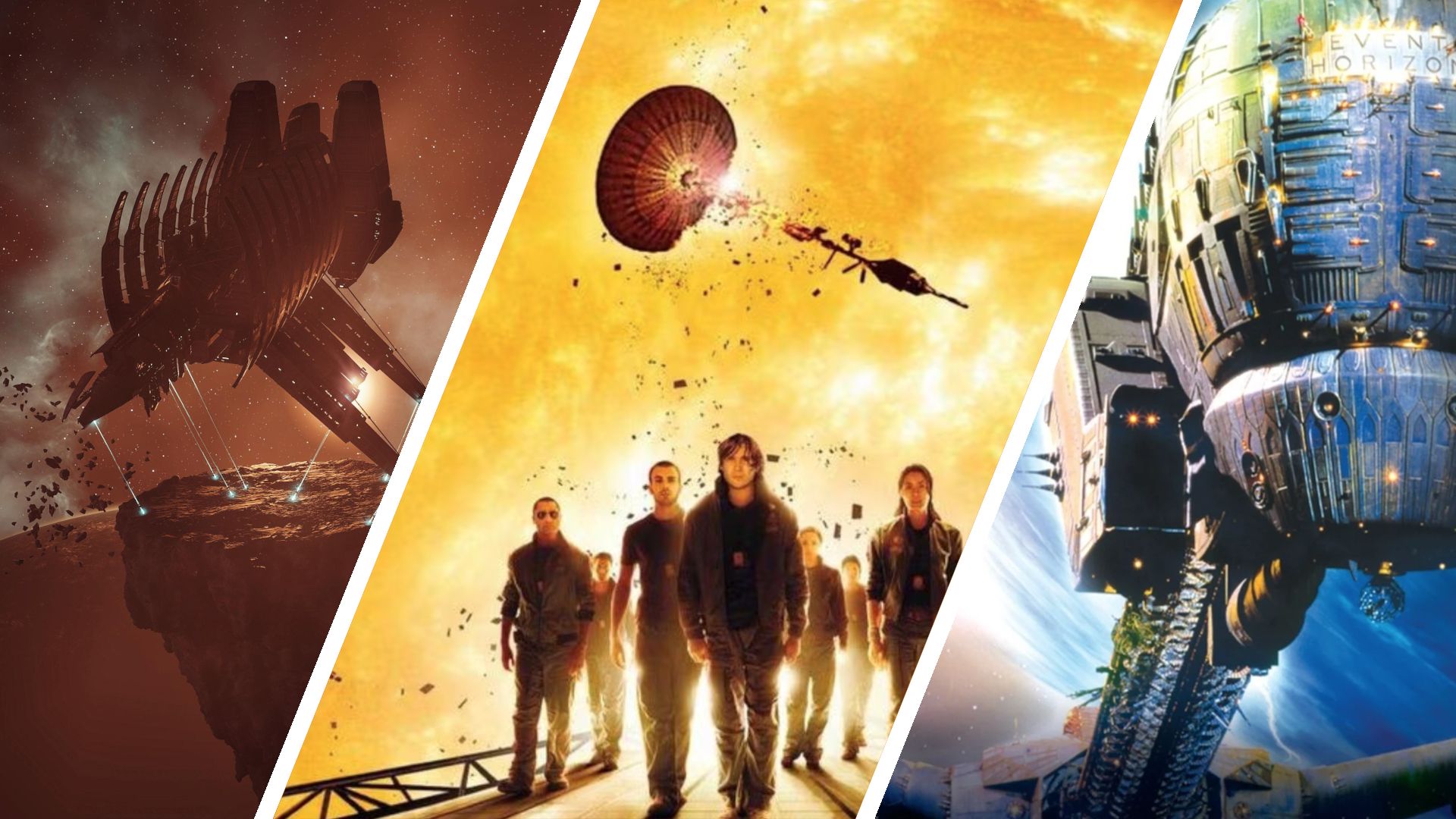
The transition of space exploration from Low Earth Orbit (LEO) to deep space missions requires a fundamental reassessment of spacecraft architecture. While popular culture often portrays spacecraft through an aesthetic or horror lens, as seen in classic science fiction works, the engineering principles underlying these designs offer a fertile ground for discussing the technical feasibility of long-duration manned missions. Analyzing massive structures and exotic propulsion systems allows us to extrapolate the current limits of materials science and orbital thermodynamics.
Structural Innovation and Systems Engineering Challenges
The design of spacecraft intended for deep space, such as those frequently depicted in sci-fi scenarios, imposes severe challenges on structural integrity and thermal management. Unlike reentry capsules, interplanetary cruise ships do not need to be aerodynamic but must be optimized to withstand the mechanical stress of constant acceleration and ionizing radiation. The most critical structural innovation lies in modularity. The concept of ships assembled in orbit, using load-bearing support trusses and shielded habitation modules, is the foundation for what NASA and ESA plan with the Lunar Gateway.
Systems engineering for such vehicles must consider the ‘Single Point of Failure’ with unprecedented rigor. In large-scale ships, the redundancy of Environmental Control and Life Support Systems (ECLSS) and the implementation of Micrometeoroid and Orbital Debris (MMOD) shielding require advanced composite materials and high-strength metal alloys. The use of centrifuges for artificial gravity, a recurring theme in conceptual designs, presents a colossal mechanical engineering challenge: how to maintain airtight seals and power transfer through rotating joints in an extreme vacuum environment without compromising the vehicle’s orbital stability.
Impact on the Production Chain and the New Space Economy
The need to build large-scale structures drastically alters the aerospace supply chain. Currently, the market is shifting from expensive, custom components to large-scale additive manufacturing (3D printing) and the use of space-qualified Commercial Off-The-Shelf (COTS) components. The production of large ships will require In-Space Manufacturing (ISM) infrastructure. This means that instead of launching a complete ship, companies will launch raw materials and autonomous robots to perform on-orbit assembly, reducing launch costs and bypassing the volume limitations of current rocket fairings.
This new economic paradigm favors companies that master orbital logistics and precision robotics. The demand for new propellants, such as liquid methane (Methalox) and liquid hydrogen, drives the creation of orbital fuel depots, transforming the dynamics of the launch market. The space economy will shift from being focused solely on Earth-to-Orbit transport to becoming a network of maintenance, refueling, and modular expansion services for permanent space infrastructures.
Real Perspectives and the Future of Interplanetary Propulsion
Looking toward the near future, the reality of aerospace engineering moves away from fiction by focusing on energy efficiency and mission sustainability. Nuclear Thermal Propulsion (NTP) and Nuclear Electric Propulsion (NEP) are the most promising technologies for reducing transit time to Mars and beyond. Unlike traditional chemical engines, NTP offers a significantly higher specific impulse (Isp), allowing larger ships to carry more payload and heavier radiation protection systems.
Beyond propulsion, the future holds advancements in closed-loop life support systems, where air and water recycling reach levels exceeding 98%. The integration of artificial intelligence for real-time structural monitoring will allow ships to detect material fatigue or leaks before they become catastrophic. While we are not building ships with ‘warp drives’ or gothic aesthetics, real engineering is paving the way for vehicles that are, in essence, self-sustaining cities navigating the vacuum, grounded in rigorous physics and economic viability.
- Via: 9 nightmarish sci-fi spaceships to crawl aboard for Halloween if you dare – Space.com.
About the Editorial Team
QOrigin Editorial is the science journalism core of QOrigin News, dedicated to transforming frontier academic research into in-depth analyses on quantum computing, physics, space exploration, and advanced systems architecture.