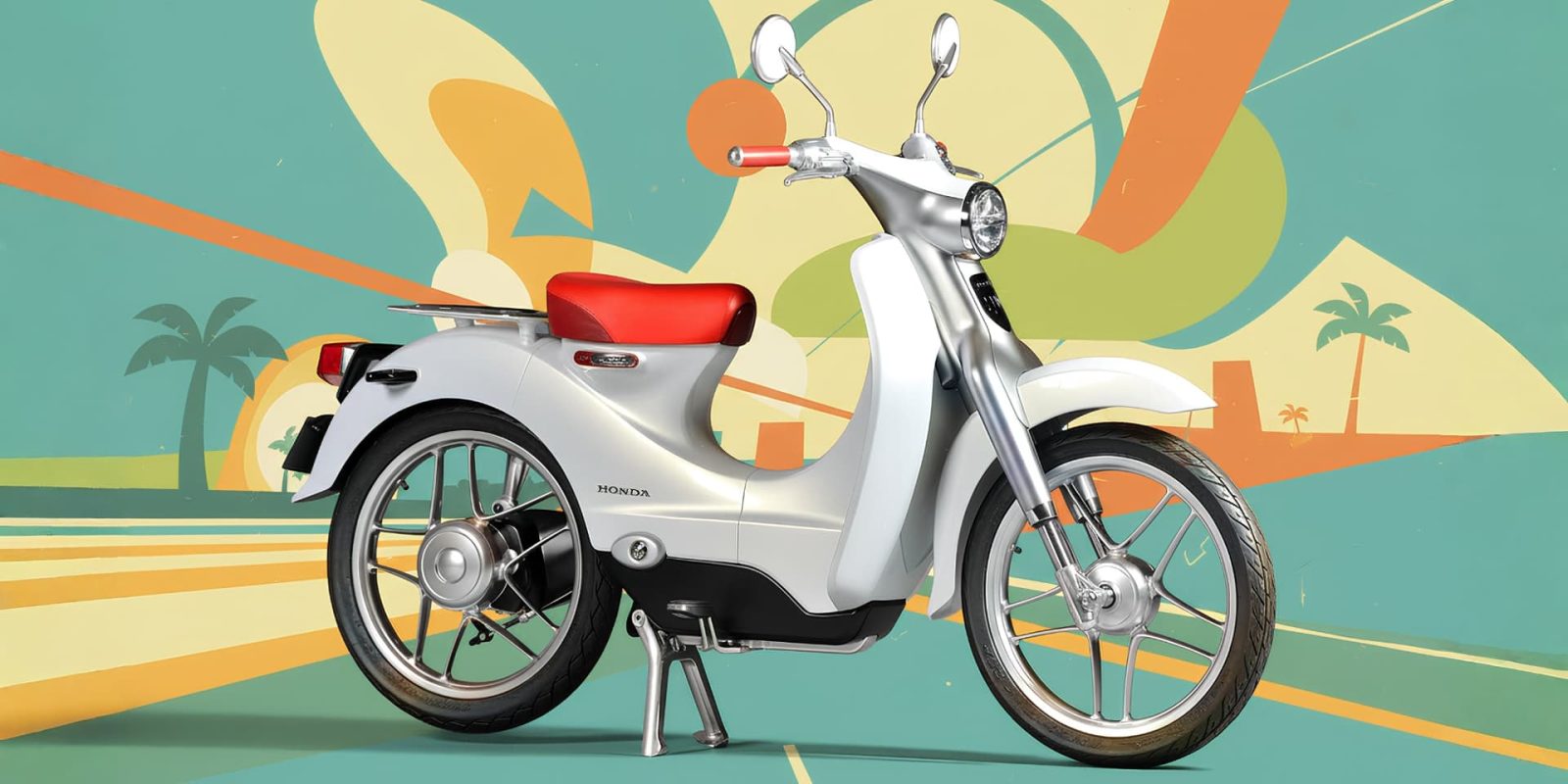
Engineering Challenges: From Pistons to Electrons
Honda built its empire on the perfection of the internal combustion engine (ICE). For decades, the brand’s engineering focused on optimizing thermodynamic cycles, reducing friction in moving components, and developing complex transmission systems. However, the transition to electric motorcycles represents a structural rupture that goes beyond simply swapping one motor for another. The primary engineering challenge lies in energy density and mass distribution. While a fuel tank keeps the center of gravity relatively constant and offers high energy density, current lithium-ion batteries are heavy, bulky, and require sophisticated battery management systems (BMS) to operate safely within compact frames.
The structural innovation required for Honda to maintain its dominance involves the creation of modular platforms. Unlike cars, where the floorpan can house large battery packs, motorcycles have severe space limitations. Honda is investing in architectures where the battery acts as a stressed member of the chassis, reducing overall weight and compensating for the current cells’ low energy density. Furthermore, the integration of high-frequency inverters and compact radial-flux motors is essential to replicate the linear torque delivery that high-performance users expect.
Supply Chain Reconfiguration and Market Dynamics
The decision to electrify the two-wheeler fleet drastically alters the global production chain. Honda, which historically controlled almost every aspect of engine manufacturing, now finds itself dependent on battery cell suppliers and semiconductors. This paradigm shift opens doors for new players, especially in emerging markets like Southeast Asia and India, where EV startups can iterate designs faster than a traditional giant.
The supply chain is shifting from a focus on metallurgy and precision machining to one centered on material chemistry and software. Honda has responded by forming the Gachaco consortium, focused on the standardization of swappable batteries. This is a strategic maneuver to mitigate the high initial cost of electric motorcycles and solve the problem of slow charging infrastructure. By turning the battery into a service (Battery as a Service - BaaS), Honda attempts to maintain control over the product lifecycle and ensure customer loyalty in an increasingly commoditized market.
Future Outlook: Solid-State and Connectivity
Honda’s real future in electric mobility lies not just in lithium-ion batteries, but in the viability of solid-state batteries (SSB). For motorcycles, where weight is the number one enemy of riding dynamics, SSBs promise to double energy density and drastically reduce charging times, bringing the user experience closer to that of a gasoline refill. Honda has already signaled that applying this technology to two-wheelers is a R&D priority for the second half of this decade.
Beyond hardware, software engineering and artificial intelligence will play a crucial role. The implementation of Advanced Rider Assistance Systems (ARAS), utilizing LiDAR sensors and cameras to predict collisions and adjust bike stability in real-time, is expected. Electrification allows for much more precise control of traction and regenerative braking, integrating the vehicle into the smart city ecosystem. Honda’s survival will depend on its ability to transition from a pure mechanical engineering firm to a mobility technology company, where software defines the riding experience as much as the chassis does.
- Via: Honda has dominated motorcycles for decades. Electric bikes are changing that – Electrek.
About the Editorial Team
QOrigin Editorial is the science journalism core of QOrigin News, dedicated to transforming frontier academic research into in-depth analyses on quantum computing, physics, space exploration, and advanced systems architecture.