The Mystery of Cosmic Seeds
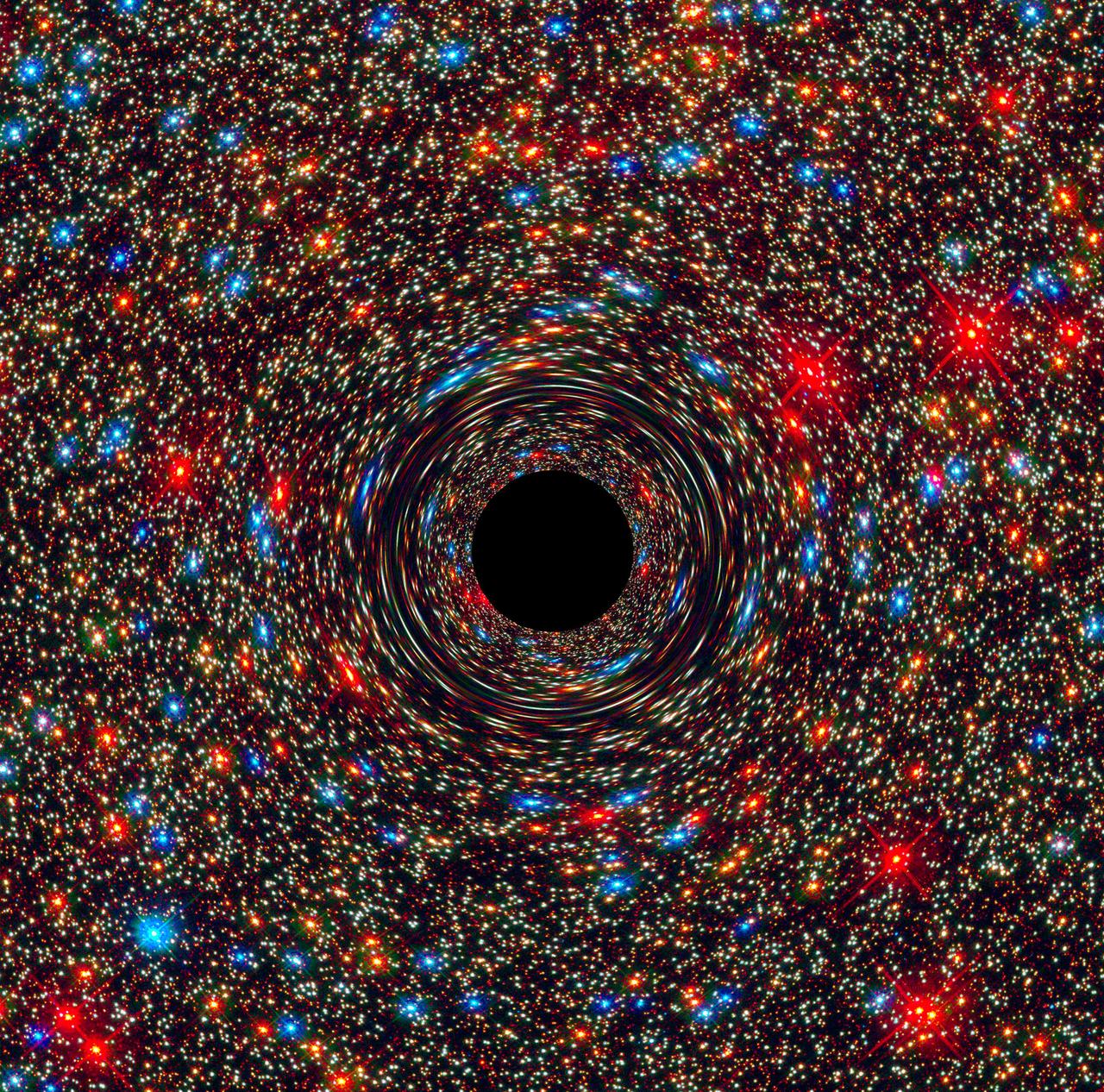
Since the James Webb Space Telescope (JWST) began transmitting data from the deep reaches of time, astronomers have faced a fundamental dilemma: how did supermassive black holes reach masses of billions of suns so quickly after the Big Bang? Previous models often relied on “seeds” inserted arbitrarily into cosmological simulations, lacking a detailed physical basis for how these objects originated. However, a new study led by Yihao Zhou, Tiziana Di Matteo, Claire E. Williams, and Aklant Kumar Bhowmick introduces the ACORN I model, a revolutionary approach that grounds the origin of these cosmic monsters in the actual physics of massive star clusters.
The research focuses on the period when the universe was less than 1 billion years old (). In this scenario, JWST has revealed the existence of extremely dense star clusters, which serve as the perfect laboratory for the birth of black holes. The model proposed by Zhou and his colleagues moves away from pre-fabricated seeds and instead simulates the process of “runaway collisions,” where stars in dense clusters successively collide until they collapse into an intermediate-mass black hole.
The ACORN Methodology: Collisions and Evolution
The distinguishing factor in the work of Yihao Zhou and his team lies in the implementation of subgrid star clusters within large-scale cosmological simulations. They do not merely insert the clusters; they allow them to evolve dynamically through two-body relaxation processes and stellar evolution. A crucial point addressed by Tiziana Di Matteo and the co-authors is the influence of metallicity-dependent stellar winds. In environments with low concentrations of heavy elements, winds are weaker, allowing stars to retain more mass and facilitating the formation of more massive black hole seeds.
The researchers applied this model to a simulation of a 5-sigma overdense region, an environment conducive to the formation of massive galaxies. They found that seeds with masses between and (solar masses) form naturally in clusters ranging from to . This direct connection between the local environment and the seed mass resolves a historical gap: the scaling relationship between the black hole and its host galaxy () in low-mass regimes, specifically for galaxies between and .
Impacts on Gravitational Wave Astronomy and TDEs
One of the most exciting findings by Aklant Kumar Bhowmick and Claire E. Williams is the impact of this model on the event rates detectable by future space missions. Because the ACORN model allows for the formation of multiple black holes within a single galactic halo, the resulting population is spatially clustered. This increases the black hole merger rate by approximately 100 times compared to traditional seeding models. This data is vital for the LISA (Laser Interferometer Space Antenna) mission, which will be able to detect these mergers and confirm the model’s validity.
Furthermore, the study analyzes Tidal Disruption Events (TDEs), which occur when a star gets too close to a black hole and is torn apart by gravity. The model demonstrates that TDEs can dominate the early growth of black holes in the to range, producing luminous flares with peak luminosities of . These events act as “beacons,” allowing astronomers to observe low-mass seeds that would otherwise remain invisible.
Conclusion and the Future of Cosmology
While the ACORN model accelerates the early growth of black holes at high redshifts (), the researchers observed that by , growth regulated by gas accretion causes central black holes to reach similar masses (around ), regardless of the seeding model used. However, the path taken to get there is fundamentally different. The approach by Zhou and his collaborators offers a much more robust and testable physical narrative, linking small-scale stellar dynamics with the evolution of the cosmic web. With the combination of JWST data and future gravitational wave detections, astronomy is on the verge of finally understanding how the titans of the cosmos were seeded at the dawn of time.
Scientific Source: ACORN I. Massive Black Hole Seeding and Tidal Disruption Events from Star Clusters in Cosmological Simulations — Authors: Yihao Zhou, Tiziana Di Matteo, Claire E. Williams, Aklant Kumar Bhowmick. Available on arXiv.
About the Editorial Team
QOrigin Editorial is the science journalism core of QOrigin News, dedicated to transforming frontier academic research into in-depth analyses on quantum computing, physics, space exploration, and advanced systems architecture.