Large-Scale Stellar Archaeology
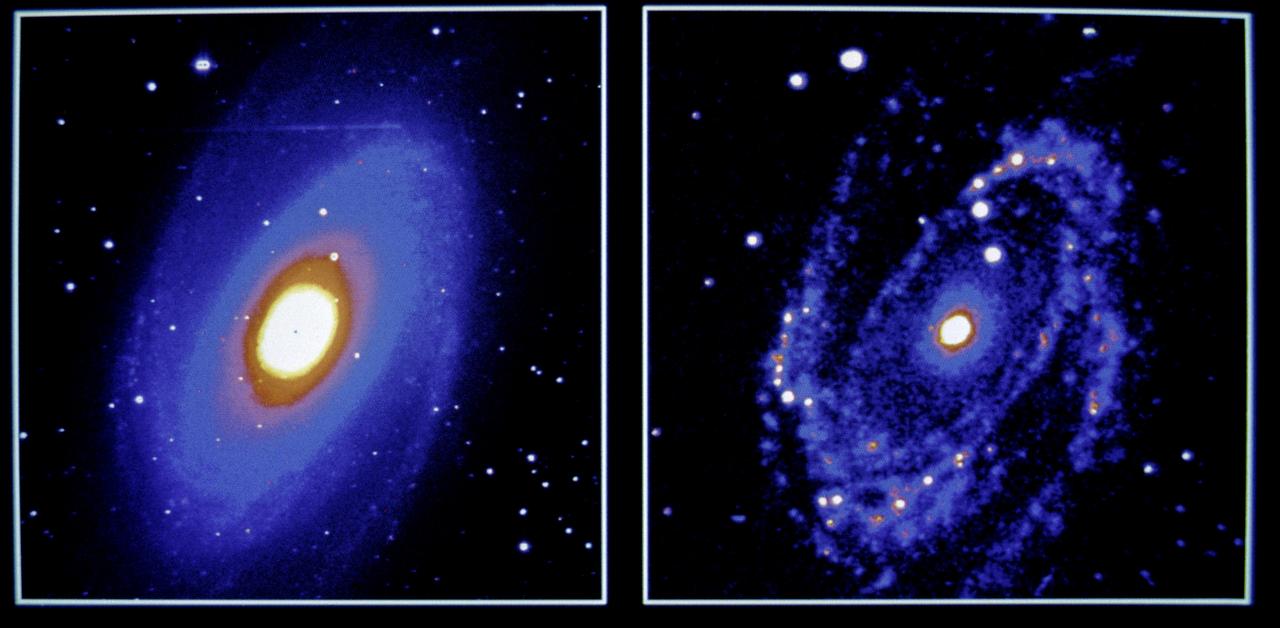
Understanding the evolution of spiral galaxies, such as our own Milky Way, depends on our ability to read the clues left behind by generations of stars. Recently, a team of researchers led by Vaishnav V. Rao, Eric F. Bell, Adam Smercina, and Tobin M. Wainer published a monumental study that transforms the M81 galaxy—also known as Bode’s Galaxy—into only the third -type spiral system to have its star formation history (SFH) mapped with spatial resolution across nearly its entire extent. Using data from the Hubble Space Telescope, the study not only details the birth of stars over the last 180 million years but also resolves a decades-long debate regarding M81’s gravitational interactions with its neighbors.
Located approximately 12 million light-years away, M81 is a perfect natural laboratory. It is part of an actively interacting group of galaxies, allowing astronomers to observe how external forces, such as gravitational tides, compete with internal (secular) processes to shape the destiny of a galactic disk. The work by Rao and colleagues utilized the color-magnitude diagram (CMD) fitting technique, which acts as a cosmic time machine, allowing for the identification of the age and metallicity of individual stars to reconstruct the galaxy’s past.
The Hidden Side and M81’s Asymmetry
One of the most surprising discoveries of the study is the “lopsided” or asymmetric nature of M81’s disk. The researchers revealed that the eastern half of the galaxy formed about 50% more stars than the western half over the same area during the last 180 million years. What makes this discovery particularly analytical is the fact that previous indicators, based on far-ultraviolet (FUV) light, failed to detect this disparity.
According to Vaishnav V. Rao and his team, this failure occurred due to interstellar dust systematics. Dust absorbs UV light, masking the true star formation rate. By using direct stellar photometry from Hubble, which better penetrates these barriers or allows for more precise calibration, the authors were able to expose a lopsidedness that challenges simplistic models of galactic evolution. This finding suggests that star formation in spiral galaxies can be much more chaotic and influenced by external perturbations than the uniform glow of satellite images might suggest.
Debunking the Recent Encounter with M82
Another crucial point of the research lies in the chronology of the interaction between M81 and its famous neighbor, the M82 galaxy. Previous studies suggested that these two galaxies had undergone a “pericenter passage”—the point of closest approach—only 150 to 220 million years ago. However, the data presented by Eric F. Bell and the rest of the team show a global star formation history that has been remarkably steady over the last 180 million years, with only a slight enhancement in the last 15 million years.
To validate this observation, the researchers turned to the TNG50 cosmological simulation. By identifying analogs of systems like M81-M82 within the simulation, they demonstrated that if such a close encounter had occurred only 200 million years ago, M81’s disk would be violently disturbed, showing massive star formation bursts that simply do not exist in the Hubble data. Instead, the evidence points to an encounter that occurred approximately 1 billion years ago. This chronological correction is fundamental to understanding how gas is transported to the center of galaxies and how disks survive close encounters without being destroyed.
Impact and the Future of Precision Astronomy
The work of Rao, Bell, Smercina, and Wainer elevates M81 to the status of a gold standard for extragalactic astronomy. Alongside M31 (Andromeda) and NGC 6946, M81 now offers a detailed map that serves as a foundation for testing theories of stellar feedback and gas dynamics. The discovery that the star formation surface density rises toward the center but falls off sharply within the innermost 4 kiloparsecs provides clues about how galactic bulges influence the quenching of star formation.
This study demonstrates that even galaxies that seem “well-known” still hold deep secrets that can only be revealed through the resolution of individual stars. With the arrival of new observatories, the methodology applied to M81 will serve as a blueprint for unlocking the history of hundreds of other galaxies in the local universe, finally allowing us to understand the complex cosmic dance that gives rise to the structures we see in the night sky.
- Scientific Source: The Spatially-Resolved Recent Star Formation History of the M81 Disk — Authors: Vaishnav V. Rao, Eric F. Bell, Adam Smercina, Tobin M. Wainer. Available on arXiv.
About the Editorial Team
QOrigin Editorial is the science journalism core of QOrigin News, dedicated to transforming frontier academic research into in-depth analyses on quantum computing, physics, space exploration, and advanced systems architecture.