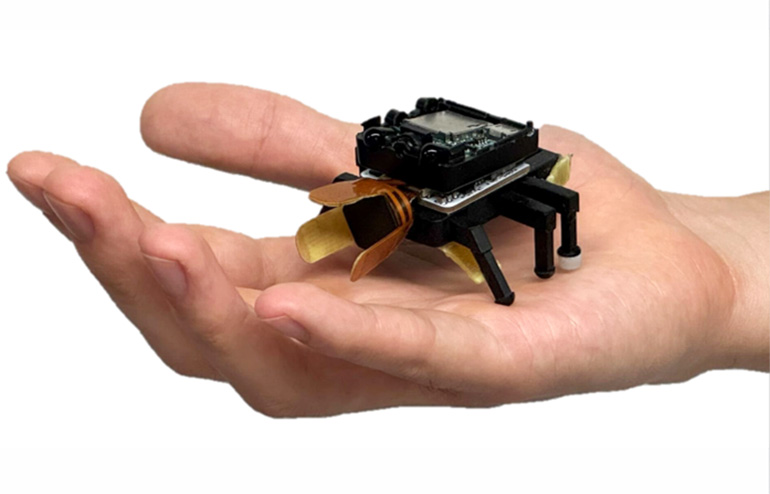
The Convergence of Ethology and Precision Engineering
Contemporary robotics is undergoing a fundamental paradigm shift. While general public attention remains fixed on the development of humanoids, the vanguard of robotic engineering has found more robust solutions in animal biomimicry. Recent breakthroughs are not merely about replicating the appearance of biological creatures, but about decoding ethology and evolutionary mechanics to solve locomotion and interaction problems that challenge traditional bipedal models. Current hardware has evolved from rigid structures to systems incorporating soft robotics and series elastic actuators, allowing quadrupedal, serpentiform, and even insect-inspired robots to navigate terrains where wheels and human legs fail.
These hardware advancements are supported by new high-strength polymers and lightweight metal alloys, enabling an unprecedented power-to-weight ratio. The integration of fusion sensors—combining solid-state LiDAR, depth cameras, and proprioceptive tactile sensors—allows these animal robots to process their environment with minimal latency. Unlike humanoids, which struggle with a high center of gravity, zoomorphic robots utilize a wider support base and low centers of mass, granting them the intrinsic stability necessary for operations in unstructured environments.
Cross-sector Applications: From Infrastructure Inspection to Disaster Resilience
The practical utility of these robotic animals transcends mere technical curiosity. In heavy industry and public utilities, quadrupedal robots are being deployed for the inspection of electrical substations and oil rigs. Equipped with thermal sensors and gas detectors, they can identify catastrophic failures before they occur, operating in high-risk areas for humans. The ability to climb industrial stairs and traverse debris makes them indispensable tools for predictive maintenance in environments where fixed automation is unfeasible.
In the search and rescue (SAR) sector, the application of autonomous swarms of insect-inspired or small rodent-like robots offers a new frontier. In collapse scenarios where every second is critical, these devices can penetrate millimetric crevices to locate survivors and map the structural integrity of the site. Furthermore, in the healthcare and assistance field, robots with friendly animal designs are proving more effective than humanoids in emotional and therapeutic support. They avoid the ‘uncanny valley’ phenomenon, providing an interaction interface that is psychologically comforting for patients in rehabilitation or elderly individuals with cognitive decline.
The Challenge of Cognitive Autonomy and Energy Density
Despite remarkable progress, the next major obstacle for the full evolution of robotic animals lies in real-time cognitive autonomy. Currently, many of these systems still rely on pre-programmed navigation algorithms or remote human intervention for complex decisions. The development of edge AI neural networks that allow the robot to learn and adapt to new obstacles autonomously, without relying on the cloud, is the necessary evolutionary step for long-duration operations in exclusion zones or planetary exploration.
Another limiting factor is the energy density of current batteries. Dynamic locomotion, especially in robots that jump or run, consumes massive amounts of energy. The transition to miniature hydrogen fuel cells or the development of new solid-state electrolytes will be crucial for these machines to operate for days, rather than just hours, without recharging. The integration of kinetic energy recovery systems, inspired by biological tendons, is also under intensive research, promising an efficiency that could finally match robotic autonomy with the endurance of biological animals.
- Via: Unusual robotic animals can prove their utility – The Robot Report.
About the Editorial Team
QOrigin Editorial is the science journalism core of QOrigin News, dedicated to transforming frontier academic research into in-depth analyses on quantum computing, physics, space exploration, and advanced systems architecture.