The Challenge of Curved Geometry in Data Processing
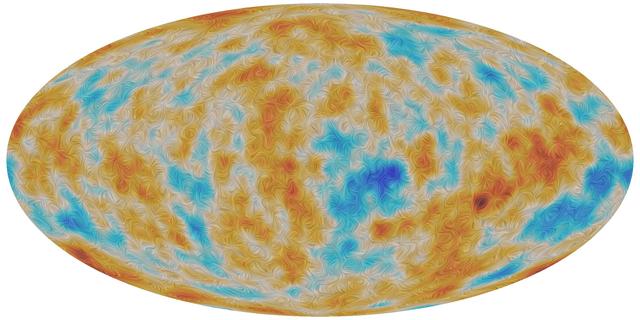
In the realm of signal processing and machine learning, the convolution operation is the fundamental pillar. On flat surfaces, such as digital camera images, convolutions are well understood. However, when dealing with data distributed over a sphere—such as global climate maps or the Cosmic Microwave Background (CMB)—the mathematics becomes exponentially more complex. Until recently, the scientific community suffered from a fragmentation of definitions: different researchers used distinct methods to handle axisymmetric or directional kernels, signals with or without “spin,” and varying computational costs.
Researcher J. D. McEwen has just published a study that promises to end this fragmentation. By proposing a unified description of convolutions on the sphere through the concept of “lifting” to the rotation group, McEwen not only organizes the field but establishes the theoretical limits of what is mathematically possible in spherical data analysis.
The Methodology: Lifting the Sphere to the Rotation Group
The central innovation of J. D. McEwen lies in treating the sphere as a homogeneous space, defined by the relation . In layman’s terms, this means the sphere can be understood through the three-dimensional rotations acting upon it. The process developed by the author involves three crucial steps: first, a spin field is lifted from the sphere to the rotation group . Next, the convolution is performed directly within this rotation group. Finally, the result is projected back onto the sphere, even allowing for a transition to a different spin .
This approach is mathematically elegant because it allows for the recovery of all previously proposed rotation-equivariant convolution definitions. By adjusting constraints on the kernel and spin choices, McEwen demonstrated that his framework is a “theory of everything” for spherical signal processing. Furthermore, the author established a vital bridge between physics literature and bundle theory, clarifying that spin fields are actually sections of associated line bundles.
A Fundamental Discovery: The Impossibility Theorem
One of the most impactful points of J. D. McEwen’s work is a rigorous mathematical proof regarding the limitations of spherical processing. He demonstrated that for maps between fields of fixed input and output spin, it is impossible to simultaneously achieve three desired properties: the use of directional kernels, output directly on the sphere, and equivariance (the guarantee that the operation’s result rotates in the same way as the input).
This discovery forces researchers to make conscious choices about which properties to prioritize in their models. If directionality is crucial, perhaps the output should reside in the full rotation group rather than just on the spherical surface. This level of analytical clarity prevents future artificial intelligence algorithms applied to astrophysics from seeking mathematically non-existent solutions.
Practical Impact on Astrophysics and Geophysics
The implications for astrophysics are profound. The analysis of the Cosmic Microwave Background, the echo of the Big Bang, depends entirely on the precision with which we treat spherical spin signals (such as light polarization). With the harmonic-space algorithms developed by J. D. McEwen and implemented in the open-source s2conv code, scientists can now process satellite data with machine precision and unprecedented computational efficiency.
In practice, this means sharper maps of dark matter distribution through weak gravitational lensing and a more refined understanding of temperature fluctuations in the early universe. Beyond the cosmos, the model was tested on terrestrial fields, promising advances in global climate models where the Earth’s curvature and wind direction (a spin vector field) require rigorous mathematical treatment that flat convolutions simply cannot provide.
Scientific Source: Unifying spherical convolutions through lifting — Authors: J. D. McEwen. Available on arXiv.
About the Editorial Team
QOrigin Editorial is the science journalism core of QOrigin News, dedicated to transforming frontier academic research into in-depth analyses on quantum computing, physics, space exploration, and advanced systems architecture.